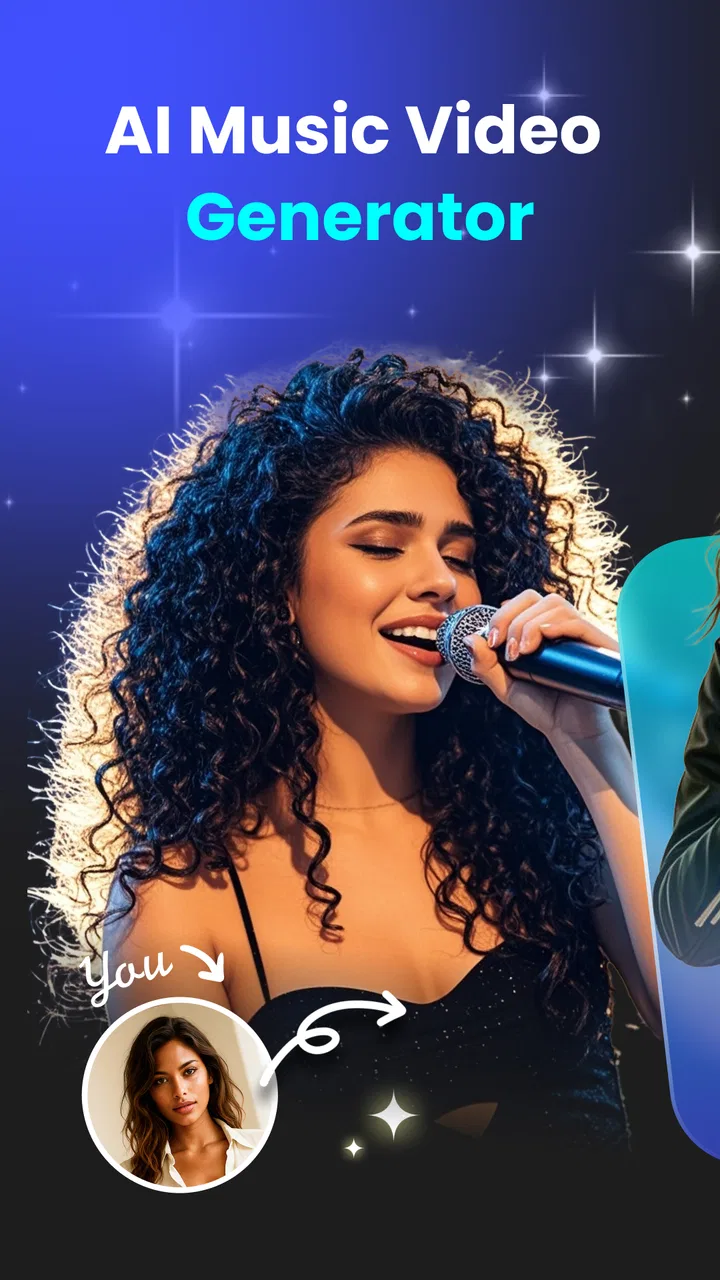
Muvio - AI Music Video Maker
- 4.7
- Rating
- 500.00K
- Installs
- Free
- Price

 Analysis by App-foxy
I approached Muvio - AI Music Video Maker as a practical music and audio app rather than a toy for producing one impressive clip and then forgetting about it. Its promise is appealing: help me create music with artificial intelligence, work with lyrics, and turn a song into a music-video style result. After spending time with that workflow, my view is that Muvio is most useful when I treat it as a fast idea generator and a lightweight publishing assistant, not as a replacement for a full recording studio or professional video editor.
The app comes from AI Song & Music Maker & AI Video & AI Photo, and it is available free of charge for Everyone. It has reached over 100 thousand installs and holds a 4.3 average from around 3.4 thousand ratings, which gives it a reasonable level of early interest. It was released on January 20, 2026, and the current version is 1.0.7, so I would still approach it as a relatively young product whose workflow may continue to change.
How I use Muvio from a blank idea to a finished clip
I use Muvio as a short, deliberate workflow rather than trying to solve music, lyrics, and visuals all at once. This section follows an idea from its first clear purpose through a lyric and audio check, then toward a video-ready result. The key is to make each decision answer one question before moving on, which makes it easier to spot where a draft needs attention.
You May Also Like

 Blood Strike: 2.5 Anniversary
Blood Strike’s Loadouts Turn Every Drop Into a Tactical Gamble
A close look at Blood Strike’s custom loadouts: how fast access to signature weapons reshapes its battle royale rhythm, rewards preparation, and narrows the gap between fights.

 Pandora - Music & Podcasts
Pandora’s Music Is Easy to Start, but Harder to Recover
Pandora’s strength is its low-effort path from a seed to a station. Its weak spot is how much confidence it asks you to place in connection, setup, and quiet recovery.

 8 Ball Pool
 Is Built on Rivalries, Rematches, and Routine
A close look at the rivalries, rematches, shared routines, and unanswered safety questions that turn a quick pool match into a persistent mobile community.

 Samsung Music
’s Quiet Strength Is Playing What You Already Own
Its reach comes less from spectacle than from dependable access to a personal library. That simplicity is both the app’s strongest retention engine and its ceiling.

 AccuWeather: Weather Radar
AccuWeather Review: A Quick, Clear Forecast for Everyday Decisions
For everyday plans, the best forecast is the one you can understand quickly. AccuWeather makes rain timing, radar, and local conditions easy to act on, with a few trade-offs.

 Hill Climb Racing
Why Hill Climb Racing Still Turns Crashes Into One More Run
A tiny car, a bumpy hill and one more upgrade: Hill Climb Racing keeps resurfacing because its simple chaos makes every near-miss feel personal.
More From Our News Desk
View All News


Starting with a clear musical brief
The biggest difference between a frustrating session and a productive one is how I begin. Instead of opening the app with a vague thought such as “make something cool,” I first decide what the result is for. A short background track for a travel montage needs a different mood from a playful song for a birthday message, and both need a different lyric approach from a personal demo.
I usually prepare a compact brief in my head: the mood, the subject, the approximate energy, and the audience. I then use those points when generating lyrics or shaping the music. This simple habit matters because AI tools can produce material that sounds acceptable while still missing the emotional direction I wanted. A focused starting idea gives me something concrete to judge rather than accepting the first output just because it is finished.
Muvio is particularly approachable for someone who does not play an instrument or know how to arrange a song. The app lowers the barrier between an idea and an audible draft. I can begin with a concept instead of a microphone, a DAW, or a collection of instruments. That makes it suitable for social posts, personal experiments, rough creative pitches, and small projects where speed matters more than studio-level control.
Keeping the lyric stage separate from the video stage
One workflow choice improved my results: I do not judge the visual result while I am still deciding whether the song itself works. I first listen for whether the words fit the intended mood and whether the generated track feels usable on its own. Only after that do I think about turning it into an MV-style video.
This separation prevents a common mistake. Attractive visuals can make a weak song seem better for a few seconds, especially when I am watching instead of listening critically. By checking the audio first, I can identify whether the problem is the lyric idea, the musical atmosphere, or simply the visual presentation. It also saves time because I avoid repeatedly creating video versions of a concept I already know I will discard.
For a realistic everyday example, imagine I want a short clip for a friend’s birthday. I would start with a warm, specific theme instead of asking for a generic celebration song. I would review the lyrics for awkward wording, listen to the track without distractions, and then create the video only when the audio feels close to the intended message. The result may not replace a carefully edited personal montage, but it can provide a finished creative starting point much faster.
What the app is good at during the first draft
The strongest part of the experience is the distance between a blank screen and a shareable concept. Muvio combines music creation, lyric generation, and song-to-video production in one place. I do not need to move immediately between a lyric assistant, a separate music tool, and a video editor just to see whether an idea has potential.
That convenience is valuable for people who think visually and musically at the same time. A creator planning a short-form post can test a theme quickly. A student can turn a presentation idea into a more memorable audio-visual draft. Someone who simply wants to experiment can explore several directions without learning complex production software first.
Still, I would not confuse convenience with complete creative control. The app is designed around assisted creation, so users who want detailed instrumentation, precise vocal editing, multitrack mixing, or frame-by-frame video work will likely outgrow it. A conventional digital audio workstation is better when the arrangement itself is the main project. A dedicated video editor is better when timing, transitions, captions, and exact image placement matter more than rapid generation.
Settings and choices I check before generating
Because Muvio is an AI-driven creation tool, the choices I make before pressing a generation control have more impact than small edits afterward. I pay attention to the wording of the prompt or concept, the emotional direction, and whether the lyrics are specific enough to guide the result. I avoid packing too many unrelated ideas into one request because that makes the output harder to evaluate.
I also decide whether I want the song to carry the entire message or whether the video will do part of the storytelling. If the visual component needs to explain the subject, I keep the lyrics simpler. If the song itself is the focus, I give the musical idea more room and avoid expecting the video to compensate for unclear writing.
Another useful check is the audience. A playful result for close friends can tolerate unusual wording or abrupt stylistic changes. A clip intended for a public profile needs a more careful review of names, tone, and context. The Everyone content rating makes the app broadly accessible, but that does not mean every generated lyric is automatically suitable for every audience. I still read the words before sharing anything.
Free access and the point where costs matter
The app can be installed and used free of charge, which makes it easy to test the basic workflow before deciding whether it belongs in my regular creative routine. There are in-app purchases priced from $9.99 to $59.99 per item. That range is important because casual experimentation and repeated production are very different use cases.
I would not spend money after a single interesting result. First, I would test whether the app consistently helps with the kind of music and videos I actually want to make. I would also consider how often I expect to generate content and whether the convenience is worth the purchase for me. Someone making one birthday clip may be perfectly satisfied with a free trial of the workflow, while a frequent creator should think carefully about recurring habits and the value of faster production.
My practical advice is to keep a small record of which ideas are worth developing before using paid options. Save the concept, note what worked, and avoid generating several near-identical versions simply because the process is easy. The most useful cost-saving habit is deciding what deserves another attempt before starting another generation.
Repeatable patterns that make sessions faster
Once I know the kind of result I want, I use a repeatable sequence rather than improvising every time. I begin with the purpose of the clip, define the mood, draft or generate the lyric direction, listen to the audio, and then move to the video step. This order keeps the session focused and makes it easier to compare different ideas.
I also prefer changing one major element at a time. If I alter the subject, mood, lyric tone, and visual concept simultaneously, I cannot tell which change improved the result. Keeping most of the brief stable while adjusting one part gives me a clearer sense of what Muvio responds to and helps me avoid random trial and error.
For recurring content, I would create a personal checklist outside the app. It might include the intended audience, the central message, lyric review, audio review, visual review, and final export check. This is not a hidden feature; it is simply a disciplined way to get more value from a tool that can otherwise encourage endless experimentation.
A second efficient pattern is to create the shortest useful version first. I would rather validate a compact idea than spend time polishing a long concept that has no clear hook. If the short version communicates the mood and message, I can decide whether it deserves a fuller treatment. If it does not, I have learned something without investing as much time.
Where Muvio fits beside familiar alternatives
Compared with writing lyrics manually, Muvio is faster at producing a starting point and more convenient for people who do not know how to structure a song. The trade-off is that manually written lyrics usually carry more personal detail and intentional phrasing. I see the app as a collaborator for the first draft, while a human writer remains better when the exact wording matters.
Compared with a traditional music production app, Muvio is less intimidating and more direct. A DAW offers deeper control over recording, effects, arrangement, and mixing, but it also demands more time and knowledge. If I want to learn production seriously, I would choose the DAW. If I want to turn an idea into an audible experiment quickly, Muvio makes more sense.
Compared with a dedicated video editor, Muvio is appealing because the music and visual concept begin in the same workflow. A conventional editor wins when I already have specific footage and need exact control over cuts, timing, overlays, and transitions. Muvio is the better first stop when the song itself is still being created and I want the video to grow from that musical idea.
Limits that experienced users should accept early
The main limitation is not that the app lacks ambition; it is that AI generation cannot guarantee that every result will match a precise creative brief. Lyrics may need rewriting, a musical direction may feel too broad, and the video may communicate a different mood from the one I imagined. I treat the first output as material to assess, not as a final answer.
There is also a quality trade-off between speed and authorship. The more I rely on automatic generation, the more likely the result is to resemble a general interpretation of a theme rather than something unmistakably personal. Adding specific details, revising the words, and rejecting weak drafts helps, but users seeking a highly individual sound may still prefer hands-on composition and editing.
Another limitation is workflow depth. Muvio can help me move from music to an MV-style result, but that does not mean it replaces every specialist tool involved in a serious release. I would be cautious about using it as the only application for a project that requires precise mastering, detailed vocal correction, complex arrangement, or exact video synchronization.
Device compatibility is also worth checking before installing. The app requires Android 8.1 or later, so it should suit many older Android devices, but the experience can still vary depending on hardware, available storage, and how comfortably the phone handles creation tasks. I would keep enough free space for generated media and avoid judging the app solely from a device that is already struggling with other demanding applications.
Who should try it, and who should skip it
I recommend Muvio to curious beginners, social creators, educators, hobby musicians, and anyone who wants to turn a loose idea into music and a visual presentation without assembling a complicated toolkit. It is especially useful when the goal is exploration: finding a mood, testing a lyric concept, or producing a quick draft for feedback.
I would also suggest it to people who often have ideas but rarely finish them. The combined workflow reduces the number of decisions between inspiration and a presentable result. That can be more valuable than advanced controls for users whose main problem is getting started.
I would skip it as a primary tool if I need exact control over every musical layer, if I already have a carefully recorded song that needs professional mixing, or if my video project depends on precise editing rather than generated presentation. In those cases, a dedicated audio workstation or video editor will provide a better foundation, even if the learning curve is steeper.
My verdict after building a repeatable habit
Muvio works best when I use it with a clear brief, a separate audio-first review, and a willingness to revise instead of accepting the first generated result. Its real strength is the connected path from musical idea to lyrics to video. That makes it approachable and efficient, particularly for casual projects and early-stage creative work.
The app is free to start, rated Everyone, and currently available in version 1.0.7, but the in-app purchase range means frequent users should evaluate the cost against their actual routine rather than assuming every feature will suit every budget. I would test the workflow with a few different projects, keep only the strongest concepts, and decide afterward whether paid use adds enough convenience.
My final recommendation is positive but specific: choose Muvio when you want a fast, guided way to turn an idea into an AI-assisted song and music-video concept. Do not choose it expecting the control of professional production software. For me, it succeeds as a creative launchpad: quick enough for everyday experiments, useful enough for real drafts, and most rewarding when I bring my own judgement to every generated result.
FAQs for Muvio - AI Music Video Maker
01What is Muvio - AI Music Video Maker?
Muvio is an innovative app that allows users to create stunning music videos using AI technology. It simplifies the video creation process by automatically syncing video clips with chosen music tracks, offering a variety of templates and effects to enhance your content. Perfect for both amateurs and professionals, Muvio streamlines video editing and boosts creativity.
02Is Muvio suitable for beginners?
Yes, Muvio is designed to be user-friendly and accessible to everyone, including beginners. Its intuitive interface and step-by-step guidance make it easy to navigate, even if you have no prior experience in video editing. The app provides various pre-set templates and an AI assistant to help you create professional-quality videos effortlessly.
03What features does Muvio offer?
Muvio offers a wide range of features, including AI-driven video editing, customizable templates, music track synchronization, and various visual effects. Users can also access a library of stock footage and music, making it easy to enhance their projects. These features cater to diverse creative needs, ensuring each video is unique and captivating.
04Are there any in-app purchases or subscriptions required?
While Muvio is free to download and use, it does offer in-app purchases and subscription options for accessing premium features. These may include advanced effects, exclusive templates, and additional stock media. Subscribing can enhance your video creation experience, but the free version still provides ample tools for quality production.
05What devices and platforms is Muvio compatible with?
Muvio is compatible with both Android and iOS devices, making it accessible to a wide range of users. It supports most modern smartphones and tablets, ensuring smooth performance and ease of use. Always check for specific device requirements and updates to ensure optimal functionality on your device.
Pros
- Easy-to-use interface for quick edits.
- Wide variety of AI-generated effects.
- Supports multiple video formats.
- High-quality output resolution.
- Fast rendering and export times.
Cons
- Limited free features
- requires subscription.
- Occasional lag with large files.
- AI effects can be repetitive.
- In-app ads can be intrusive.
- Limited music library selection.

Muvio - AI Music Video Maker
Gallery